|
Grown on the tails of hardy horses to impressive lengths of more than 80 cm and even up to 130 cm, then cleaned, sorted, bundled, and cut to length, bow hair is an essential component of the bow.
It provides direct contact between bow and instrument. The most commonly used bow hair comes from Mongolia or China and is
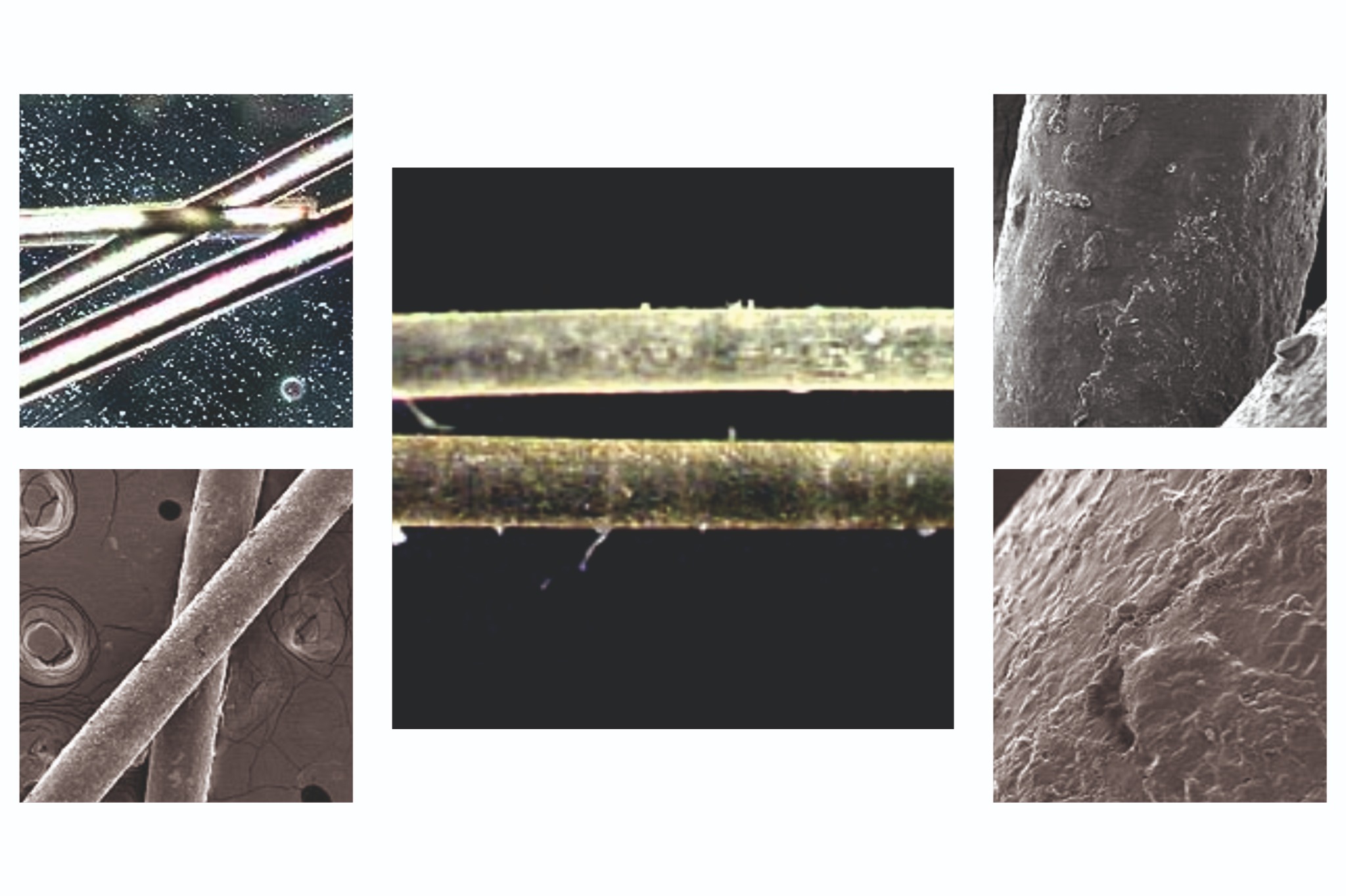
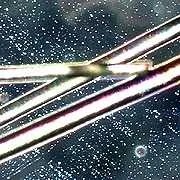 pale yellow, almost white. Chemically bleached hair is unsuitable for bow making: it is brittle and would break too quickly. Stallion tail hair is preferred because, unlike mares’ hair, its structure is not damaged by urine.
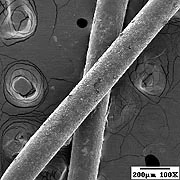
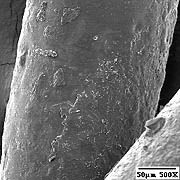
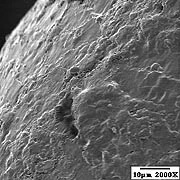
Under a microscope, horsehair consists of a core surrounded by small “scales.” As the bow is used, these scales gradually break off and the hair no longer grips the string as well, making a rehair necessary.
A violin-bow rehair today consists of about 170 hairs. This is a guideline, adjusted by the Bogenmachermeister according to the thickness of the available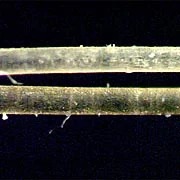 hair. For a violin bow, 170 hairs correspond to a weight of about 5.6 g. Some Bogenmachermeister, particularly in Saxony’s instrument-making region, count the hairs; other workshops use precision scales to determine the amount.
Matching the amount of hair to the bow is essential to its playing qualities. Stiffer sticks can accommodate a somewhat thicker bundle than more flexible ones. Too much hair, however, can produce unwanted noise. Too many hairs lie on top of one another, and their movement within the bundle at the point of contact with the string creates a rustling sound. Too little hair cannot withstand the stick’s force for long and stretches too quickly.
 One difficulty in working with this natural material is its change in length with weather conditions. Horsehair is used in hygrometers for good reason. At high humidity, the hair lengthens and moves the instrument’s pointer. Although useful in measuring humidity, this property creates difficulties in bow making. A bow correctly rehaired in spring, toward the end of the heating season with its dry indoor air, may soon have hair that is too long as humidity rises. Conversely, a rehair fitted in humid summer weather may become too short under “normal” conditions. One difficulty in working with this natural material is its change in length with weather conditions. Horsehair is used in hygrometers for good reason. At high humidity, the hair lengthens and moves the instrument’s pointer. Although useful in measuring humidity, this property creates difficulties in bow making. A bow correctly rehaired in spring, toward the end of the heating season with its dry indoor air, may soon have hair that is too long as humidity rises. Conversely, a rehair fitted in humid summer weather may become too short under “normal” conditions.
 Choosing the hair length therefore requires considerable judgment from the bow maker.
For the hair to grip the string at all, the musician needs rosin, which is rubbed onto the hair. Rosin is made from various tree resins and additives and is available in shades ranging from amber to almost black. Within narrow limits, it can influence the instrument’s sound.
 In my workshop, we use high-quality hair with an original length of more than 100 cm. Hair toward the lower end of the tail becomes progressively thinner and includes many short strands. Using exceptionally long hair allows me to select only the best sections of this fine material for the finished rehair. In my workshop, we use high-quality hair with an original length of more than 100 cm. Hair toward the lower end of the tail becomes progressively thinner and includes many short strands. Using exceptionally long hair allows me to select only the best sections of this fine material for the finished rehair.
At this point, I would like to explain briefly how sound is produced. Swedish physicist Anders Askenfelt has studied this subject extensively and presented his findings at a symposium on the bow in a lecture that, unfortunately, has not yet been published.
His basic idea divides the vibration cycle into two phases. In the first, the bow grips the string and pulls it away from its resting position. At the microscopic contact points, friction heats the rosin to about 70–90 °C, causing it to melt. It loses its grip and allows the string to spring back. As the rosin cools and grips the string again, the next cycle begins. Askenfelt illustrated this process with highly temperature-sensitive infrared video, revealing a substantial temperature rise at the contact point of the bow hair. A detailed analysis of how the width of the hair ribbon affects the bow’s tonal qualities would go beyond the scope of this article. Different tonal nuances can, however, be achieved by choosing rosins with different melting ranges.
Thomas M. Gerbeth |